
A Christian View of Intelligence, Genius, and Human Worth
Intelligence is the ability to learn, understand, reason, solve problems, and apply knowledge. It matters because our decisions affect our work, relationships, responsibilities, and understanding of the world.
Yet intelligence is not the same as wisdom. Wisdom is the moral and practical ability to use truth well. A person can reason quickly and still choose what is selfish, destructive, or false.
A Christian view honors intellectual growth without turning mental power into a measure of human worth or a path to divinity. Intelligence is a gift to steward; it is not the source of identity, holiness, or salvation.
Intelligence Is More Than Results

The source proposes seven levels of intelligence. Its early distinctions contain a useful observation: knowing how to accomplish a task differs from understanding why a method works. Practical skill, curiosity, analysis, creativity, judgment, and insight are related abilities, but they are not identical.
This helps a young reader see why grades, speed, wealth, and job titles reveal only part of a person’s mental life. Someone can excel at calculation yet struggle to understand people. Another person can read a room wisely, repair machinery, compose music, or notice patterns that others miss.
The source then defines intelligence through visible power and success:
Super smart people obtain peak positions in this world in terms of power, success and wealth.
This resembles meritocratic individualism, a worldview that treats achievement as evidence of superior ability and often gives high status to those who produce exceptional results. Its supporting idea is reasonable: competence usually changes what a person can accomplish. The error is treating worldly rank as a reliable measure of intelligence.
Power can be inherited, wealth can be gained dishonestly, and capable people can work faithfully without public recognition. Success also depends on opportunity, health, education, cooperation, timing, and social conditions. Results matter, but they require interpretation.
The source makes the priority even stronger:
Intelligence is the highest factor above all other factors and is the only important or most important one of all.
This is intellectualism when intellectual ability becomes the ruling standard for evaluating life. Historic Christianity values the mind, but it does not place intelligence above faithfulness, love, justice, humility, and holiness. First Corinthians 13:2 teaches that extraordinary knowledge without love leaves a person spiritually empty.
James 3:13 connects wisdom with good conduct and humility. Biblical wisdom is therefore not cleverness alone. It includes truth, character, restraint, teachability, and action suited to what is good.
Evaluate intelligence by the quality of reasoning, the truth of its conclusions, the character guiding it, and the good it serves. Achievement without moral judgment can magnify harm.
Human Worth Cannot Be Ranked by Mental Power

People clearly differ in knowledge, memory, speed, creativity, and judgment. Those differences affect responsibilities and qualifications. They do not create higher and lower classes of human beings.
The source treats self-recognized intelligence as evidence of rank:
Smart people know and acknowledge that they are smart. Being at this level is already above the vast majority of the common people.
This resembles elitism, which assigns superior standing to a select group based on ability, education, achievement, or perceived insight. Elitism can begin with a true distinction between expertise and inexperience. It becomes unjust when competence is confused with greater human value.
Confidence is not proof of intelligence. The unskilled can overestimate themselves, while the capable can recognize the limits of their knowledge. Proverbs 12:15 contrasts the self-certainty of a fool with the wisdom of listening to counsel. Intellectual maturity includes knowing that correction remains necessary.
The source later makes identity depend entirely on intelligence:
Your intelligence is the only thing that defines who you are.
This directly conflicts with traditional Christian belief. Genesis 1:26-27 grounds human dignity in being made in the image of God. That dignity belongs to infants, adults, people with profound disabilities, celebrated thinkers, ordinary workers, and those whose abilities decline through age or illness.
Christianity does not deny standards. A surgeon requires medical competence, a judge requires sound reasoning, and a teacher must understand the subject. Equal dignity does not mean equal ability or interchangeable roles. It means that ability never authorizes contempt.
For adults, this distinction shapes institutions. Schools, workplaces, churches, and families need honest assessments of skill while refusing to reduce people to performance. When worth depends on intelligence, the weak become disposable and the successful become proud.
Mental ability changes what a person can do; it does not change what a person is worth.
Recognize excellence, assign responsibility according to competence, protect the vulnerable, and speak of every person with dignity. Clear standards and equal worth belong together.
Infinite Intelligence Belongs to God Alone
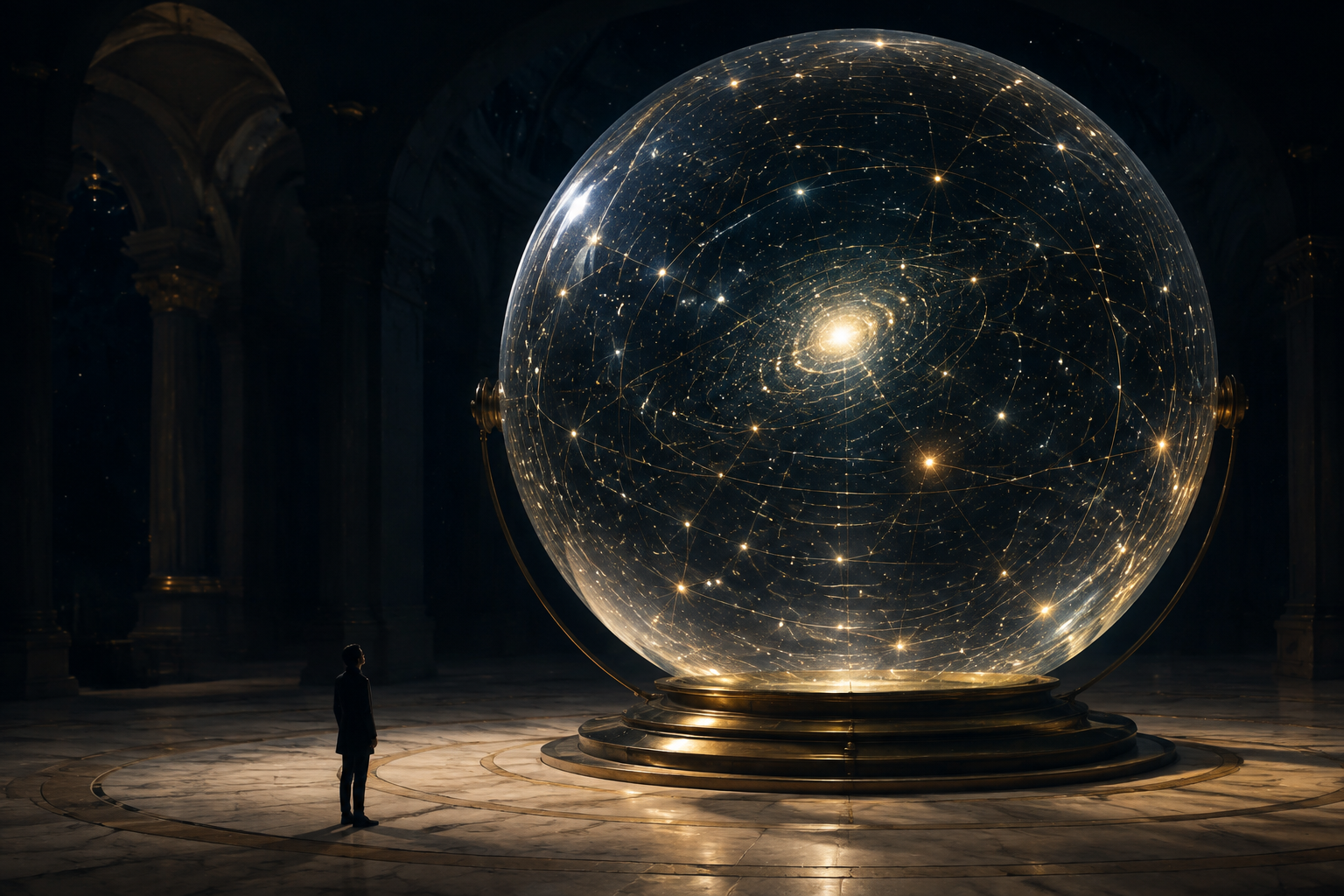
Finite means limited. Human beings have limited time, memory, knowledge, attention, and perspective. We can grow greatly, but growth does not remove our creaturely limits.
The source describes a different relationship between God and humanity:
Infinite Intelligence is the highest, it is the all, and at the same time it is you and I.
Humans and all other conscious beings can evolve more and more towards becoming All Knowing or Infinite Intelligence. It is to return to oneness, to God.
These claims resemble pantheism and nondual monism. Pantheism identifies God with the totality of reality. Nondual monism teaches that apparent distinctions ultimately belong to one reality. Related ideas appear in several religious and philosophical traditions, including forms of Hindu thought and modern New Age spirituality, but these traditions differ substantially. The wording supports a resemblance, not a proven historical origin.
The internal reasoning is coherent within that worldview. If every being is an expression of one divine consciousness, spiritual development means awakening to the unity already beneath individual existence. Human limits then appear temporary rather than essential.
Historic Christianity teaches both God’s nearness and the Creator-creature distinction. Acts 17:28 says that we live and move in God, yet the same passage identifies God as the one who made the world and gives life to all. Dependence on God does not mean identity with God.
Psalm 147:5 describes God’s understanding as beyond measure. Isaiah 55:8-9 declares that God’s thoughts and ways exceed ours. Christians can receive truth from God and grow in wisdom, but they do not become omniscient.
The source reaches the same self-divinizing conclusion near its end:
Infinite intelligence is who we are fundamentally and what we can experience to the degree that we choose and think.
This conflicts with the Christian doctrine of creation. Humanity bears God’s image but is not made of God’s essence. Sin is not simple ignorance of hidden divinity, and salvation is not achieved by expanding consciousness. Salvation is reconciliation with God through Jesus Christ by grace.
The practical consequence is serious. If the deepest self is treated as infinite intelligence, personal intuition can become immune to correction. Christian humility keeps revelation, reason, evidence, community, and moral accountability in conversation.
God alone is all-knowing; human wisdom grows through dependence, truth, correction, and grace.
Pursue understanding without claiming divine identity, and let every insight remain accountable to God’s revealed truth. Intellectual growth is safest when wonder and humility remain together.
Chakras, Source Energy, and Occult Knowledge Need Clear Boundaries

A worldview is a basic framework for understanding reality. When ideas from several religions are combined, the result is called syncretism. The source combines Christian terms with chakras, Source Energy, devas, angelic ranks, manifestation, and occult knowledge.
Its chakra claim is explicit:
The seven levels of intelligence also correspond to the seven chakras.
Chakra systems developed within Indian religious traditions, especially Hindu and Buddhist tantric traditions. A chakra is understood as a subtle center within a spiritual body. Western esoteric and New Age movements later adapted chakra language into broader teachings about energy, health, psychology, and consciousness.
The source advances that adapted energy model:
The fourth chakra is the heart which is the center of pure power. It emits the strongest magnetic field and produces the torsion field of manifestation.
The seventh chakra is the link to the divine and the connection with Source.
This is not a biblical account of the human person. Christianity describes people as embodied creatures with heart, mind, soul, strength, desires, and conscience. Scripture does not teach seven spiritual energy centers, torsion-field manifestation, or a chakra path to divine connection.
Some practices associated with another tradition can be studied historically or used in a nonreligious physical form. The religious claims attached to them still require honest identification. Renaming Source as God does not make the underlying metaphysics Christian.
The source also constructs a mixed spiritual hierarchy:
Within the super genius level, there are many levels ranging from the superhuman, the demi god, the devas, the godlike, the angelic hierarchy from the angel to the principalities, powers, virtues, dominions, thrones and all the way up to the highest levels of the cherub, the seraph and even the seven archangels that stand before that throne of God including Metatron who is the knower of the secrets and the master of the mysteries.
Devas belong to Indian religious traditions. Several angelic terms come from biblical passages and later Christian classification. Metatron belongs to later Jewish mystical and apocalyptic traditions rather than the biblical canon. Combining them into intelligence levels creates a modern esoteric synthesis, not historic Christian angelology.
The source later praises hidden spiritual counterknowledge:
This is the Occult (Hidden) Level of Intelligence where one knows the secret ways by which the Dark Forces work and the Real Solutions to counter them.
Occult traditions seek hidden spiritual knowledge or power through methods outside ordinary observation and public revelation. Christianity acknowledges spiritual evil, but Deuteronomy 18:10-12 rejects divination and sorcery. Colossians 2:15 centers victory over spiritual powers in Christ, not mastery of secret techniques.
Name the worldview attached to a spiritual practice, examine its claims, and refuse to merge incompatible beliefs through shared vocabulary. Discernment requires more than replacing one tradition’s terms with Christian words.
Christian Wisdom Joins Truth, Character, and Love

The source is right to value inquiry, clear distinctions, resistance to manipulation, original thought, and practical competence. Christians do not honor God by refusing to think. Jesus commands love for God with the mind in Matthew 22:37.
The source also states:
One definition of intelligence: “Intelligence is the ability to make finer distinctions.”
Careful distinctions protect judgment. We need to distinguish evidence from assumption, confidence from competence, influence from control, Creator from creation, and spiritual language from biblical doctrine.
Yet distinction alone is not enough. A sharp mind can divide accurately and still act without mercy. The New Testament presents mature wisdom as peaceable, gentle, open to reason, impartial, and sincere in James 3:17.
Christian genius, if the term is used, is not a spiritual caste. It is exceptional creative or intellectual capacity placed under truth and service. Romans 12:3-8 teaches believers to think soberly about themselves and use differing gifts for the good of the body.
Adults carry a greater responsibility when their ability grants influence. Teachers shape understanding. Leaders distribute power. Artists form imagination. Scientists and builders create tools that can serve or injure. Greater capacity increases accountability.
True wisdom orders knowledge toward what is truthful, good, just, and loving. It does not worship the mind that possesses it.
Study deeply, test claims carefully, welcome correction, develop your gifts, and use your strongest abilities in service to God and neighbor.
A renewed mind is neither anti-intellectual nor self-divinizing. It grows in understanding while remaining humble about human limits. That balance produces sound judgment, responsible conduct, and wisdom that can be trusted.


