
Understanding Brainwave Entrainment: How Rhythms Influence Mind and Consciousness
What Is Brainwave Entrainment?

Brainwave entrainment is the process by which the brain’s natural electrical rhythms synchronize with an external stimulus. To entrain means “to pull along with,” and this idea can be illustrated by simple physical examples. When one tuning fork begins to vibrate at a certain pitch, a nearby tuning fork will start vibrating at the same frequency. Similarly, if several pendulum clocks swing unevenly, over time they will fall into a shared, synchronized rhythm.
In the human brain, electrical activity fluctuates continuously. These fluctuations create brainwaves—patterns of rhythmic electrical impulses that correspond to different states of consciousness. Brainwave entrainment occurs when the frequency of these brainwaves aligns with external rhythmic signals such as sounds, lights, or tactile sensations.
Because the brain is naturally responsive to its environment, it constantly adjusts its rhythms based on external cues. For example, the calming sound of a waterfall may promote relaxation, while the rush of fast-moving cars might increase alertness or anxiety. Music especially powers this effect, quickly shifting emotional states by influencing brainwave patterns.
The Five Brainwave States and Their Significance

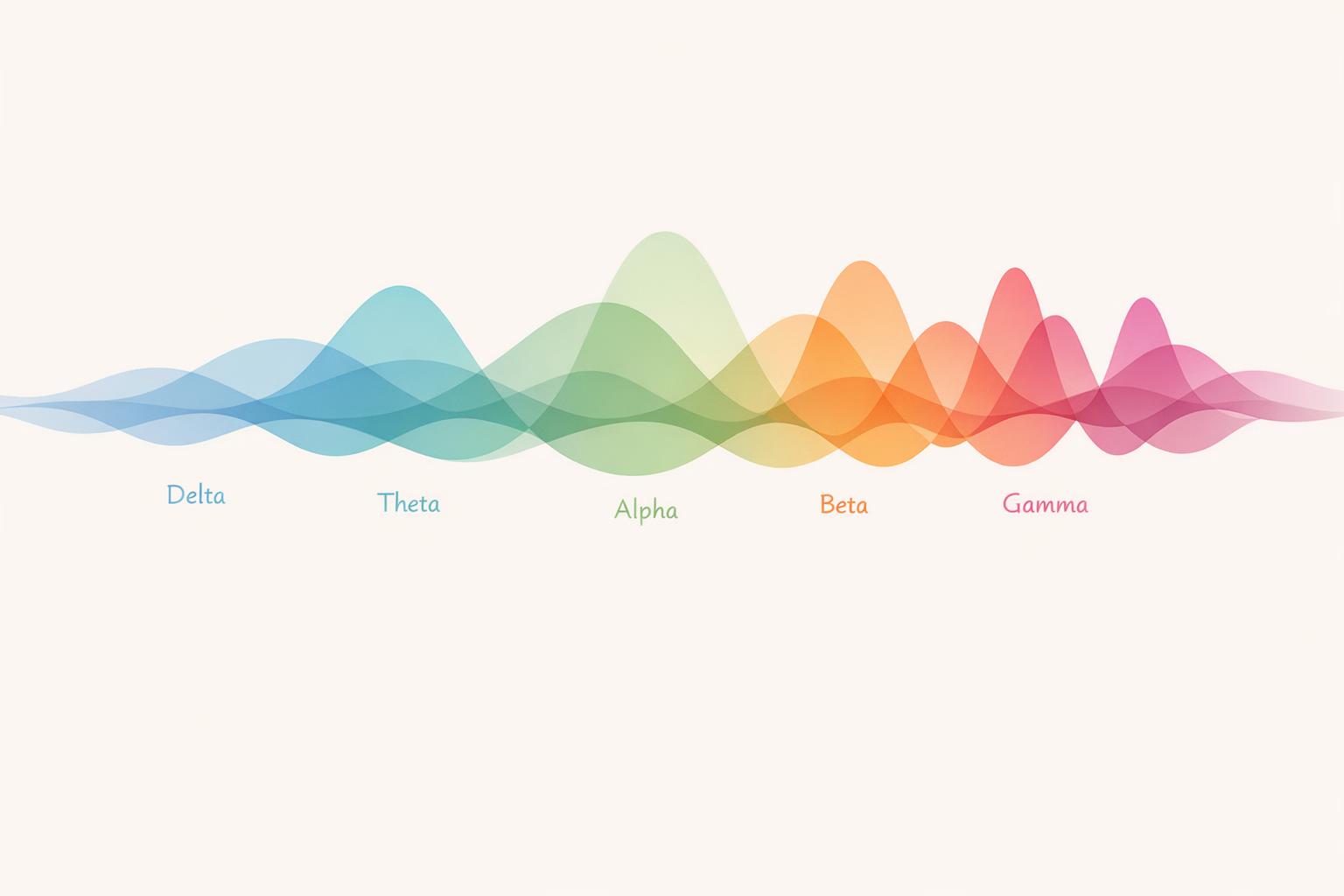
Neuroscience identifies five key brainwave types, each associated with distinct frequency ranges and mental states. These are delta, theta, alpha, beta, and gamma waves. Understanding them helps us recognize how brainwave entrainment affects consciousness and cognition.
Delta waves are the slowest brainwaves, operating up to 4 Hz. They primarily occur during deep, dreamless sleep and are associated with restorative bodily processes and unconscious states.
Theta waves range between 4 and 8 Hz and commonly appear in light sleep, deep relaxation, and trance-like states. Theta is linked to creativity, intuition, and access to subconscious imagery, often surfacing during moments just before sleep or upon waking.
Alpha waves fall between 8 and 12 Hz and correspond with relaxed yet alert consciousness. Alpha activity is typically detected during calm, quiet moments, often with eyes closed. It is the rhythm of a Meditative state that balances wakefulness and rest.
The beta wave range, above 12 Hz, is most prominent during active thinking, focused attention, or anxiety. Beta waves reflect engagement with the external world through cognitive effort and problem-solving.
Finally, gamma waves occupy frequencies from approximately 26 to 80 Hz and are associated with higher-level mental functions such as perception, memory integration, and conscious awareness. Gamma activity is often linked to moments of insight and intense cognition.
Your state of consciousness at any moment depends on which brainwave type dominates your brain’s electrical activity. Through entrainment, external rhythms can shift this balance, guiding the mind into desired states for relaxation, creativity, or focus.
Practical Applications and Spiritual Implications of Brainwave Entrainment
Brainwave entrainment technology harnesses these principles, using rhythmic soundscapes or stimuli to induce specific brainwave states. By embedding certain frequencies beneath soothing music, these soundtracks help deepen meditation, enhance creativity, improve focus, and heighten self-awareness.
The benefits extend beyond mere relaxation. Entrainment stimulates the production of beneficial brain chemicals such as endorphins, which promote well-being and can slow aging. It fosters what neuroscientists describe as “whole brain functioning” by enhancing communication between the two brain hemispheres. This kind of integrated brain activity is believed to distinguish extraordinary creative and intellectual abilities in history’s greatest minds.
Apply brainwave entrainment consciously to cultivate mental clarity and renewed judgment. By intentionally engaging with rhythmic stimuli that promote calm alertness or deep focus, you participate in renewing your mind—a fundamental principle for developing a sound and stable mental life.
The renewal of the mind carries profound ontological significance. It reflects a transformation not only in how one thinks but in how one perceives reality and makes decisions. Entrainment offers a tangible example of how external order (rhythm) can mediate internal order (mental states), emphasizing that soundness of mind flows from coherent interaction with one’s environment rather than isolation.
Ultimately, this understanding challenges us to deliberately shape our surroundings and mental habits. The entrainment of brainwaves unveils a dynamic interplay between physiology, environment, and consciousness. Recognizing and responsibly navigating this interplay equips us to foster mental renewal grounded in clarity, stability, and sound judgment.
"Do not conform to the pattern of this world, but be transformed by the renewing of your mind."
— Romans 12:2


