
Understanding Flow: How Focus and Harmony Renew the Mind for Greater Clarity and Purpose
What Is Flow and Why Does It Matter?

Flow is a psychological state of deep involvement where a person is fully focused on an activity that challenges their skills just enough to keep them engaged. In this state, time seems to vanish, distractions fade, and the experience becomes richly meaningful. Flow matters because it represents the optimal ordering of consciousness, where thoughts, emotions, and senses align harmoniously toward a single goal.
To understand why flow is so beneficial, it helps to grasp the concept of psychic energy. Psychic energy is our attention; our capacity to focus mental resources. When something distracts or disrupts our consciousness, it consumes psychic energy and causes what psychologists call psychic entropy, a state of inner disorder that impairs our effectiveness and well-being. Contrary to this disorder, flow frees psychic energy by organizing it around a meaningful purpose.
Thus, experiencing flow is not merely enjoyable; it restores and strengthens the self. After a flow experience, individuals often feel more unified and integrated internally, as well as more connected to others and the world. This integration is part of what brings a sense of mental renewal and stability.
The Mechanics of Flow: Attention, Challenges, and Autotelic Actions
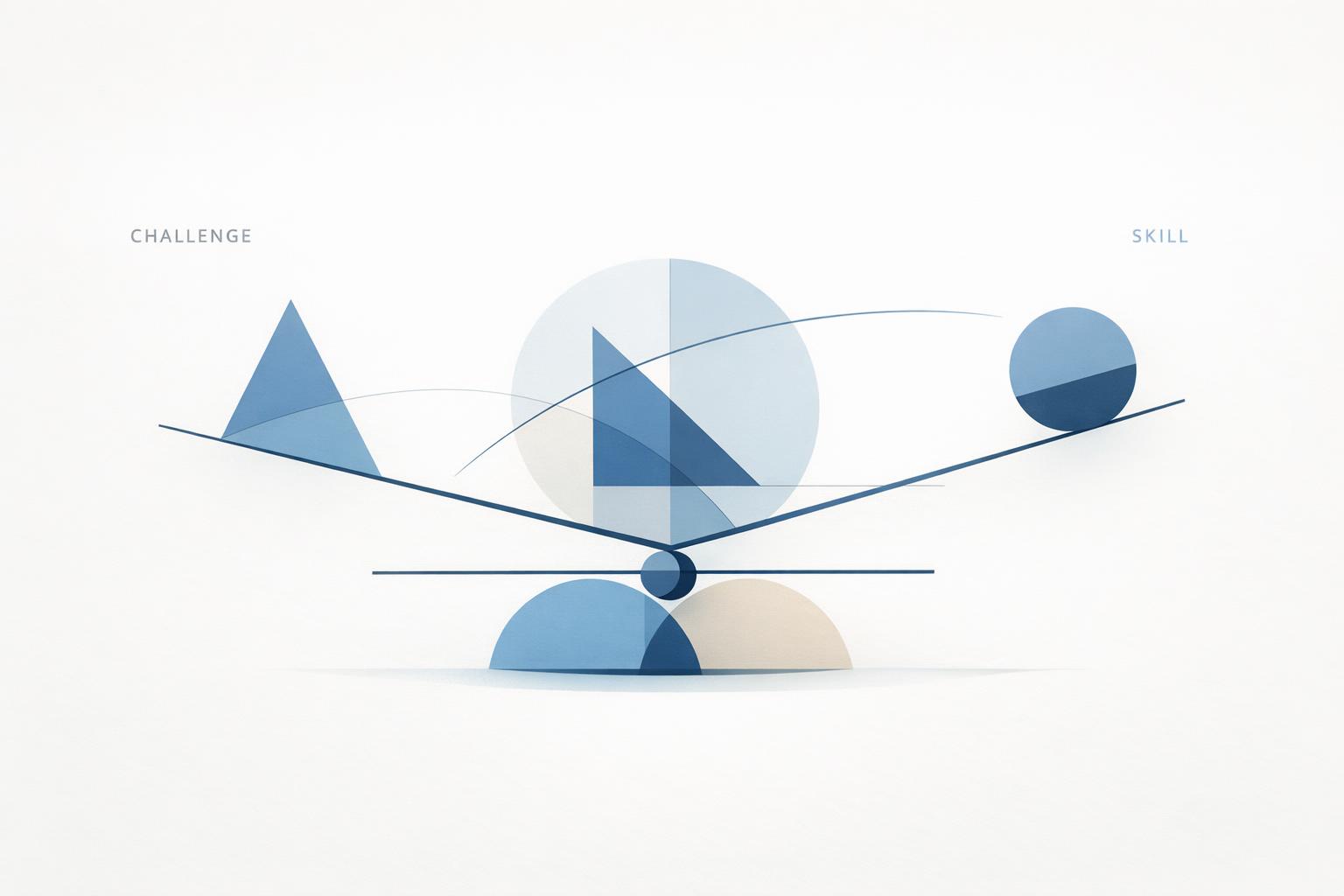
Flow occurs when the challenges of an activity match one’s skill level, creating a balance that neither bores nor overwhelms. Activities that promote flow usually have clear rules, goals, and feedback systems. This combination directs attention steadily, allowing the mind to settle into a rhythm of concentrated effort and reward.
Central to this experience is the idea of autotelic activities. The word "autotelic" comes from Greek roots meaning “self” and “goal.” Such activities are done for their own sake—the act itself provides fulfillment rather than being a means to an external end.
In an autotelic state, the person’s consciousness merges with the activity. The sense of a separate self fades; instead of a dancer dancing, there is only the dance. This dissolution of self-consciousness helps to avoid distractions, allowing psychic energy to flow freely and undivided.
The Power of Flow in Daily Life and Spiritual Renewal
Regularly entering flow enhances the quality of life by turning work and creativity into sources of purpose and joy. When we learn to organize our consciousness to experience flow, we regain control over our psychic energy. This control is a victory over the disorder that normally disrupts our minds.
Cultivate the habit of focusing on tasks where your skills meet challenges, engage in autotelic activities, and seek feedback that sharpens your efforts. These practices encourage flow states and lead to greater concentration, resilience, and peace of mind.
From a spiritual perspective, flow aligns well with the principle that a renewed mind is a sound mind. As flow builds inner order and harmony, it facilitates sound judgment and stable thinking. This harmony is not only psychological but existential, allowing us to live more fully in the present moment with clarity and meaning.
More than an enjoyable experience, flow becomes a tool for growth. It strengthens the self against the chaos of psychic entropy, making it possible to invest attention intentionally rather than scatter it in worry or boredom. In this way, flow serves as a spiritual discipline as much as a psychological state, inviting a disciplined focus that cultivates mental clarity and purposeful action.
Ultimately, the struggle for the self lies in mastering attention. By learning how flow works and fostering conditions that support it, each person can transform their mental landscape from disorder into harmony. This transformation renews the mind, fosters resilience, and clarifies judgment, equipping us to face life’s complexities with a sound, steady mind.


