
Understanding the Science of Vibration: How Energy Shapes Our Physical World and Well-Being
What Is Vibration and Why Does It Matter?
At its core, vibration is the movement or oscillation of energy at a specific frequency. Everything in the physical universe consists of energy vibrating at various rates. When you look closely, what seems solid or static is actually energy in constant motion.
Light is a clear example. Visible light is made up of waves vibrating at different frequencies that produce colors. At one end of this spectrum is red, with longer wavelengths and lower frequencies, and at the other is violet, with shorter wavelengths and higher frequencies. This pattern applies across all waves of energy, from sound to chemicals.
Recognizing that vibration underlies physical reality allows us to see the world with clarity. Instead of viewing phenomena as arbitrary, we understand them as expressions of frequency and stability in energy. This perspective provides a foundation for explaining how light affects mood, why health fluctuates, and how the body interacts with its environment.
All physical reality is fundamentally energetic, and the nature of this energy—its frequency and coherence—determines its impact.
This principle moves beyond abstract theory; it is practical and applicable to daily life, influencing decisions about rest, work, and wellness.
Light and Environment: The Role of Frequency in Physical and Emotional States
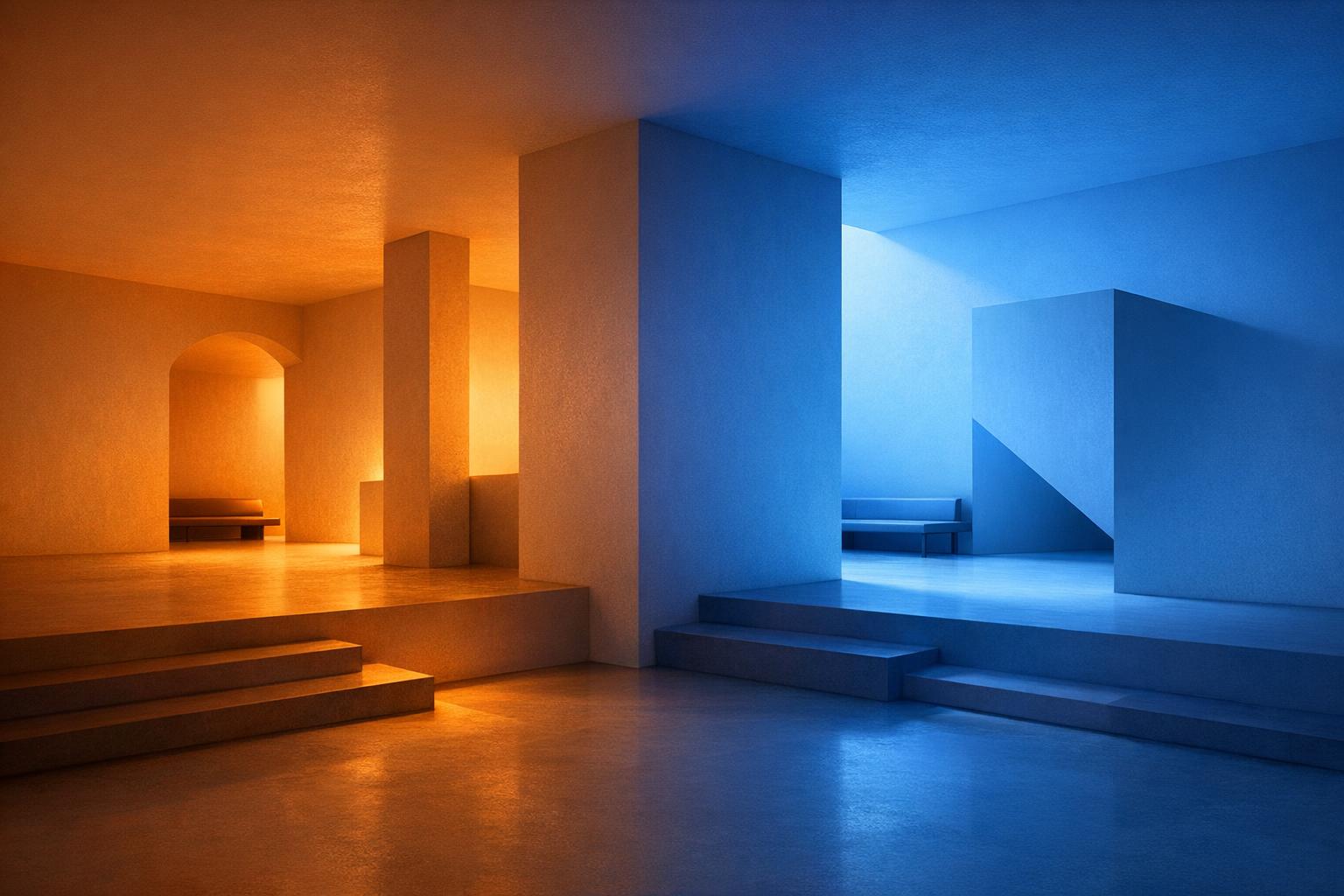
Light not only illuminates our surroundings but also influences how we feel and function. Different types of artificial light, like warm and cool light, have distinct vibrational characteristics. Warm light, rich in lower-frequency colors such as orange and yellow, tends to be calming and relaxing. In contrast, cool light, containing higher-frequency colors like blue and green, increases alertness and can be more stimulating.
Increasing the brightness of warm light doesn’t necessarily make it more energizing because energy depends more on frequency than intensity. For example, a blue flame, which vibrates at a higher frequency, produces more heat than a yellow flame with a lower frequency, even if the yellow is brighter.
Therefore, choosing the right kind of light affects not only ambiance but also our mental and physical states. In spaces meant for rest, warm light supports relaxation and calm. In areas requiring focus or activity, cooler light can enhance energy and alertness.
The quality of energy we expose ourselves to shapes our physiological and psychological balance.
Health as Vibration: Balancing Energy for Well-Being
Health can also be understood in terms of vibration and energy balance. Environments that are cold, dark, and stagnant tend to be low in vibration, providing ideal conditions for harmful microorganisms. Sunny, airy spaces with abundant light have higher vibration and promote health by discouraging bacterial growth.
This principle extends to our bodies. Disease and sickness often represent a loss of energetic stability—a lowering or disruption of healthy vibration. The more vibrant and coherent our body’s energy, the better its resilience and capacity for healing. This idea is illustrated in the recommendation to drink warm rather than cold water when ill. Warm water supports the body’s energetic processes by maintaining or increasing vibration, assisting the immune system's efforts. Cold water, on the other hand, can dampen these processes.
Energy in the body operates through the medium of water and oxygen, critical to cellular function and disease recovery. The natural impulses to cough or expel mucus are ways the body rebalances its energy by removing low-vibration substances that interfere with health.
Health is inherently about sustaining coherent and constructive vibration within the body and environment.
Sound, Chemicals, and Human Experience: Vibrational Frequencies at Work
Sound, like light, is vibration moving through space. Different types of music resonate at various frequencies, producing distinct emotional responses. Heavy bass sounds have lower vibration, offering a grounded, sometimes calming effect, while fast-paced, energetic music carries higher vibration, stimulating physical and emotional energy.
Chemicals also have vibrational signatures. Alcohol, for instance, lowers a person’s vibrational coherence, which helps explain why people might drink to relax or relieve stress—though excessive consumption destabilizes the body and impairs function. On the other hand, substances like Earl Grey tea can counteract alcohol’s depressive effect and elevate vibration mildly, encouraging alertness.
Stress and anxiety, though high in energy, are forms of disordered vibration—they are high frequency but incoherent, which can harm rather than help. True health and well-being come from coherent, balanced vibrations rather than mere intensity or energy level.
The coherence of vibrational energy is more crucial than its amount, whether in emotions, substances, or environmental influences.
The Practical Impact: Thinking and Living with a Mind Renewed by Vibration
Embracing the view that everything is vibration transforms how we approach life. When we understand that thoughts, environment, health, and behavior all interact through the language of energy, we gain tools for increasing stability, clarity, and sound judgment.
Positive thoughts reinforce high-frequency vibrational states, making us more receptive to constructive experiences and growth. This is not about wishful thinking but about recognizing the deep connection between mind, body, and universe as energetic systems.
Such awareness urges intentional choices: selecting health-supportive environments, nurturing coherent emotional states, and engaging with the world in a balanced rhythm. It challenges us to live thoughtfully, maintaining harmony within and around us.
Cultivate coherence in your mental and physical vibration by choosing environments, habits, and thoughts that support balance and stability.
A renewed mind is a sound mind, capable of clear perception and wise decisions grounded in the reality of vibrational energy.


